
Almost everyone drinking coffee is drinking one species. Around 60% of world production is Coffea arabica, most of the rest is Coffea canephora — Robusta — and a rounding error is Coffea liberica.
Vietnam is one of very few origins where you can drink all three from the same country in the same week. Here is what actually separates them.
The table
| Arabica | Robusta | Liberica | |
|---|---|---|---|
| Species | C. arabica | C. canephora | C. liberica |
| Chromosomes | 44 (tetraploid) | 22 (diploid) | 22 (diploid) |
| Share of world crop | ~60% | ~40% | <1% |
| Altitude | 900–2,000 m | 0–1,000 m | 0–800 m |
| Caffeine (dry weight) | 1.2–1.5% | 2.2–2.7% | ~1.2% |
| Chlorogenic acid | 5.5–8% | 7–10% | high |
| Lipids | ~15% | ~10% | ~11% |
| Sugars | 6–9% | 3–7% | low |
| Acidity in cup | High | Low | Low |
| Body | Light–medium | Heavy | Very heavy, syrupy |
| Rust resistance | Poor | Excellent | Excellent |
| Yield per hectare | Low | High | Very low |
| Bean shape | Oval, even | Round, even, smaller | Large, irregular, asymmetric |
Arabica
The prestige species, and for good reason: it has the most aromatic complexity of the three, and its higher sugar content gives the roaster more to work with.
It is also difficult. Arabica is self-pollinating and genetically narrow, which makes it fragile in the face of disease — coffee leaf rust in particular. It wants altitude, cool nights and a wide diurnal temperature swing, and it will not tolerate much heat or humidity.
Altitude is doing something specific here. Cool nights slow ripening; slow ripening gives the cherry more time to accumulate complex sugars; the bean grows denser and harder. That density is why high-grown Arabica handles heat in the roaster differently and why it holds acidity.
In Vietnam, Arabica means Lâm Đồng — above all Cầu Đất at 1,500 to 1,700 metres, which is the only Vietnamese area that clears the altitude bar comfortably. Expect dried plum, raisin, caramel, and a wine-like acidity rather than the citrus brightness of East Africa.
Robusta
The workhorse, and the species with the worst reputation relative to its actual potential.
Robusta is genetically diverse, self-incompatible (it must cross-pollinate, which keeps the gene pool wide), and tough. It shrugs off rust, tolerates heat and humidity, grows at low elevation, and yields two to three times what Arabica does.
The chemistry that gives it its reputation is real: about twice the caffeine and considerably more chlorogenic acid, both bitter compounds. Less sugar to caramelise. What that adds up to is a coffee that punishes careless processing and careless roasting far more than Arabica does — and for a century, careless is exactly what it got. The economics of why.
Picked ripe, processed with intention and roasted with judgement, Robusta gives you something Arabica cannot: a genuinely heavy body, low acidity, deep chocolate and molasses sweetness, and a crema in espresso that Arabica struggles to match. The SCA's Fine Robusta protocol exists precisely because scoring it against Arabica criteria was meaningless.
It is also the species where processing innovation has moved fastest, for the straightforward reason that nobody had a reputation to protect.
Liberica
The outlier, and the one most people will never taste.
Everything about Liberica is inconvenient. The tree grows to eighteen metres if left alone, which makes hand-picking difficult. The cherries ripen unevenly. The beans are large, asymmetric and irregular, which jams mills and sorters built for the other two. The husk is thick. Yields are low. It was planted widely under colonial administrations as a rust-resistant alternative, then abandoned almost everywhere once Robusta proved easier to handle.
What survives are old trees on family plots — in Vietnam, mostly in Quảng Trị, where the surviving stands are frequently forty years old and older.
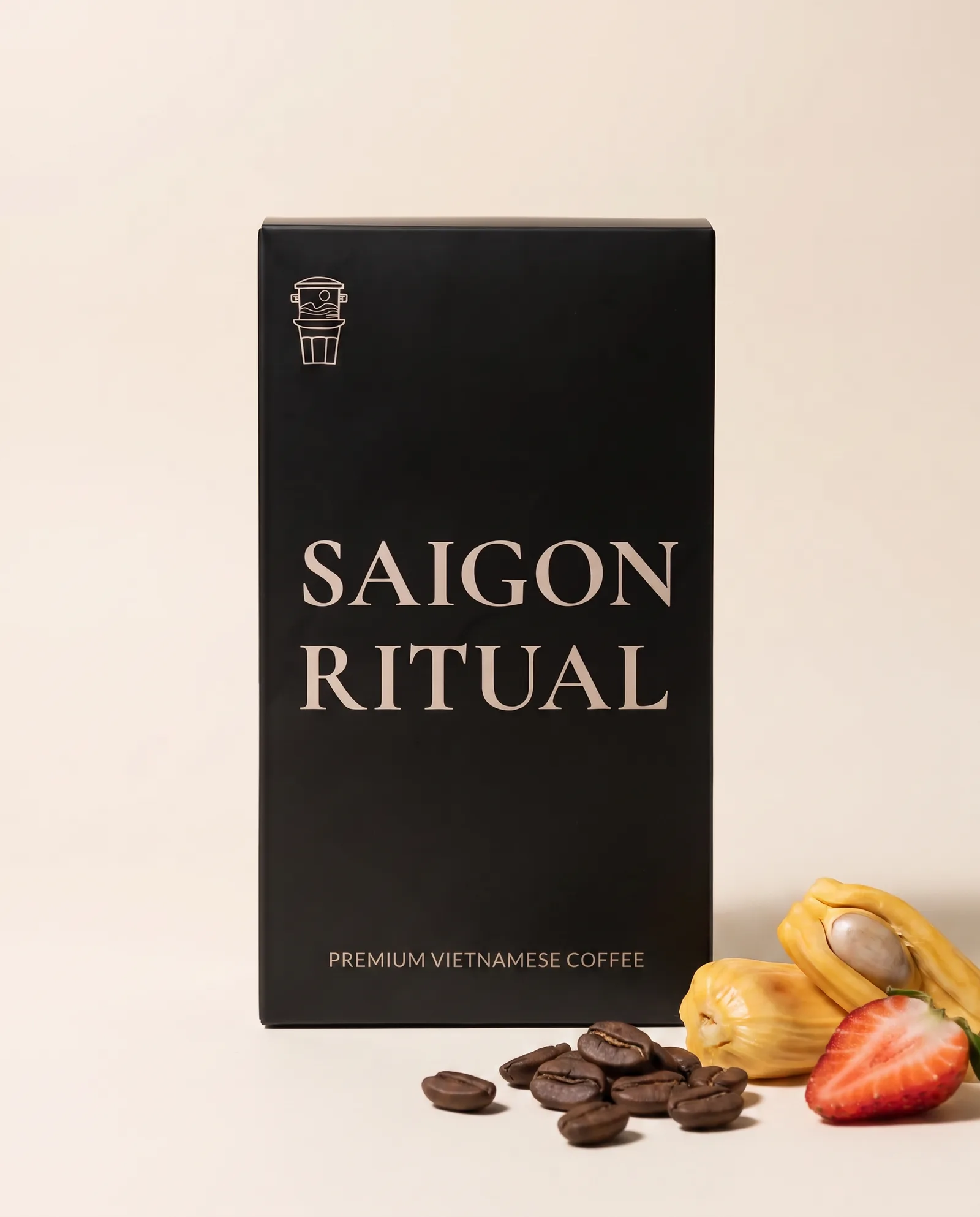
The cup is unmistakable. Jackfruit, first and clearly. Molasses. Strawberry on the finish. A body that is genuinely syrupy. Low acidity and low caffeine. It reads as a fruit more than as a coffee to first-time drinkers, which is exactly why the Vietnamese name is cà phê mít — jackfruit coffee. The ester chemistry behind that is the real explanation.
How to taste them side by side
Brew all three the same way and drink them in one sitting. The differences are not subtle and you will not need a vocabulary to notice them.
Method matters less than consistency, but a phin is a good leveller — it is unforgiving of thin coffee and generous to body, which flatters Robusta and Liberica without hiding what Arabica is doing.
Order them light to heavy: Arabica, then Robusta, then Liberica. The reverse order will flatten the Arabica entirely.
Black, no sugar, for the first cup of each. Then do whatever you like.
What you are looking for:
- Acidity — how much brightness sits at the front. Arabica will have it; the other two mostly will not.
- Body — how the liquid feels. Run your tongue across the roof of your mouth. Arabica is tea-like to syrupy; Robusta is heavy; Liberica coats.
- Finish — how long it stays and what it leaves. Robusta's chocolate persists; Liberica's fruit lingers oddly long.
Three species, one sitting. It is the fastest coffee education available, and Vietnam is one of the few places you can buy all three from a single origin.